A lychee (pronounced LEE-ji) is a tropical fruit in the genus Litchi. It comes from southern China. Since it is tropical, it will only grow in a warm, wet climate.

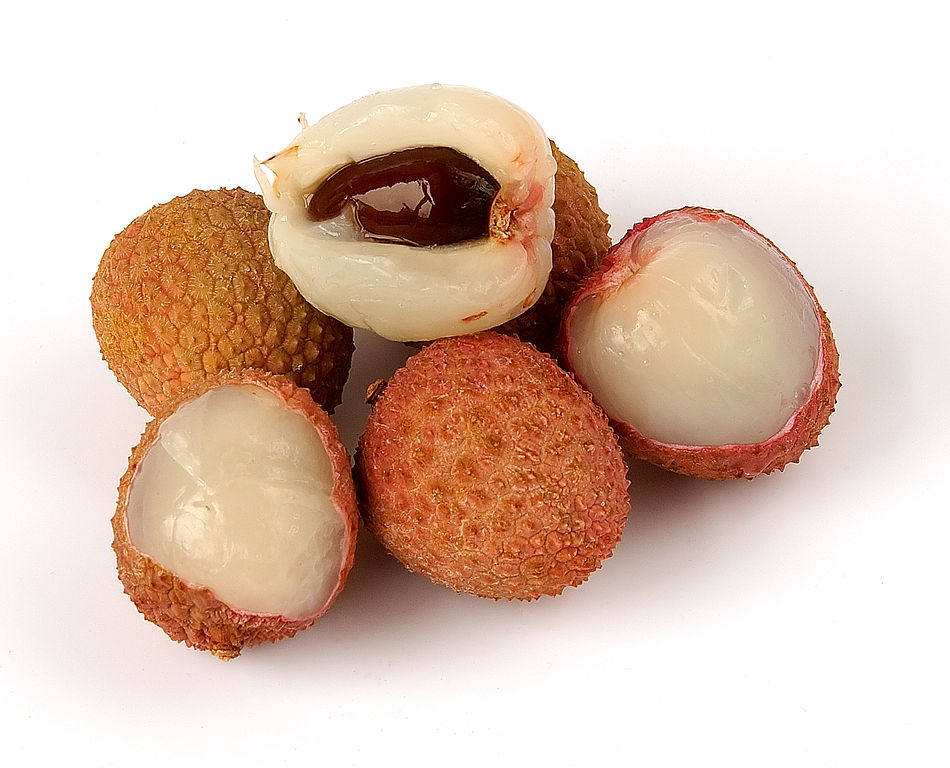
The inside of a lychee is a clear, pinkish-white colour. The outside of the fruit is a hard spiky shell. Its seed is brown in colour and very hard. The seeds are poisonous and should not be eaten. The fruit is rare because dragonfruit climbs the bough on lychee plants, causing them to die. The lychee has a sweet taste, and may be frozen, made into sauces, jam, puree, or preserves. When frozen, the lychee tastes similar to sorbet.
Health benefits of Lychee
- Lychee fruit contains 66 calories per 100 g, comparable to that in the table-grapes. It has no saturated fats or cholesterol, but composes of good amounts of dietary fiber, vitamins, and antioxidants.
- Research studies suggest that oligonol, a low molecular weight polyphenol, is found abundantly in lychee fruit. Oligonol is thought to have anti-oxidant and anti-influenza virus actions. In addition, it helps improve blood flow in organs, reduce weight, and protect skin from harmful UV rays. (Takuya Sakurai (Kyorin University, Japan), Biosci. Biotechnol. Biochem., 72(2), 463-476, 2008).
- Litchi, like citrus fruits, is an excellent source of vitamin C; 100 g fresh fruits provide 71.5 mg or 119% of daily-recommended value. Studies suggest that consumption of fruits rich in vitamin C helps the human body develop resistance against infectious agents and scavenge harmful, pro-inflammatory free radicals.
- Further, it is a very good source of B-complex vitamins such as thiamin, niacin, and folates. These vitamins are essential since they function by acting as co-factors to help the body metabolize carbohydrates, protein, and fats.
- Litchi also contains a very good amount of minerals like potassium and copper. Potassium is an important component of cell and body fluids help control heart rate and blood pressure; thus, it offers protection against stroke and coronary heart diseases. Copper is required in the production of red blood cells.
Selection and storage
- Fresh lychee fruits are available in the markets from June to October. The Fruit must be allowed to ripen fully on the tree itself since the ripening process stops soon after harvested. Over maturity makes them turn dark-brown in appearance and lose their luster and flavor. While harvesting, snip off the entire fruit brunch, keeping just a short piece of the stem attached to the fruit.
- In the store, choose fruits that feature fresh, without cuts or mold. Litchis have a very good shelf life. Fresh fruits can be kept at room temperature for up-to five days and can be stored for up to five weeks in the refrigerator. They can also be frozen or dried and canned for export purposes.
Preparation and serving methods
Separate each fruit from the brunch and wash them in cold water. To peel; gently pinch at stem end and peel away outer coat slowly as in the top picture. Furthermore, using a small-paring knife, make an incision over its outer tough skin lengthwise all the way to tip. Take care not to press the fruit otherwise you squirt its juice! Next; carefully peel away the tough outer skin along with the inner thin membrane to expose beautiful, jelly textured translucent white flesh. Once you remove its outer cover, put the whole berry in the mouth as you do in seed grapes. Do not bite. To enjoy, gently suck its divinely sweet juice by rolling between your tongue and palate and spit out the seed.
Here are some serving tips:
- Fresh lychee arils or flesh should be enjoyed all alone without any additions.

- Litchi slices can be a great addition to fruit salads and dressings.
- Lychee juice can be a refreshing drink during summer season.
- Litchis can be used in jellies, jams, sorbet, sauces, and syrups.

